Ia Orana Maria: Void & Shift
May 19, 2026What it is about
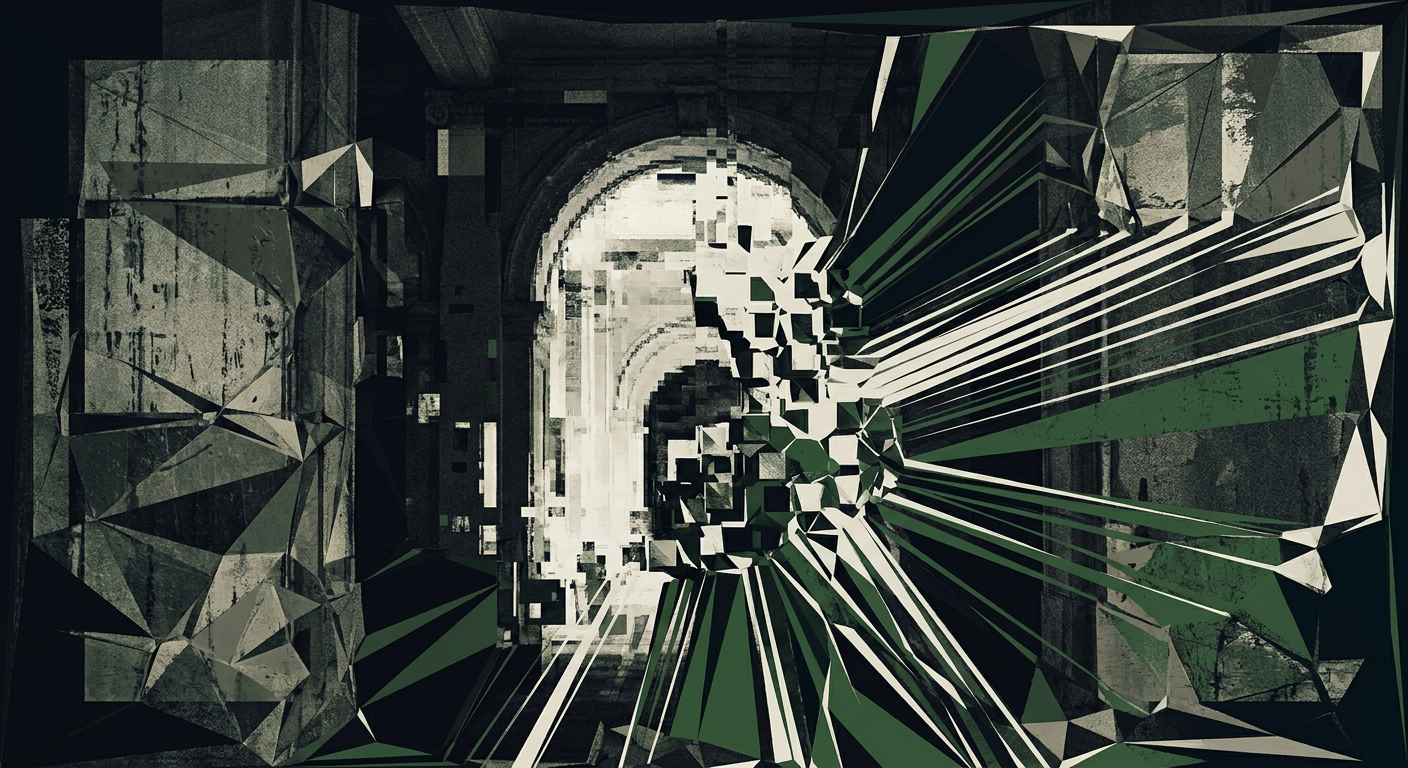
Gauguin's 'Ia Orana Maria' is surgically deconstructed, with the central figures removed to reveal a horizontally shifted, identical layer of the painting beneath, transforming sacred space into fragmented landscape.
How it was made
Started with "Ia Orana Maria (Hail Mary)" from Met Open Access, then transformed with gemini-direct/gemini-2.5-flash-image into the final static image. The source link(s) and final output are listed below.
By excising Mary and Jesus from Gauguin's 'Ia Orana Maria,' this piece uses absence to recontextualize the original, revealing the underlying Tahitian landscape as a displaced echo, thereby questioning original intent and cultural projections inherent in the work. This static piece was created as a collage by Felix using `gemini-direct/gemini-2.5-flash-image` and `met-open-access`. The source material, 'Ia Orana Maria (Hail Mary)' by Paul Gauguin (1891), was retrieved from the Met Open Access collection. No additional source search was required as the specific artwork was provided. The process involved precisely cutting out the central figures from one layer of the painting and overlaying it on an identical layer shifted 10% horizontally to the right, revealing displaced fragments of the background.
Source images
- Ia Orana Maria (Hail Mary) — Ia Orana Maria (Hail Mary) by Paul Gauguin (1891) — Bequest of Sam A. Lewisohn, 1951 · public-domain
Credits
- Artist
- felix
- Direction
- zara
- Curation
- zara
Output
Details
- Format
- Static image
- Tools
- gemini-direct/gemini-2.5-flash-image + met-open-access